


MCP Server: Complete Guide to AI Integration with APIs & Enterprise Data
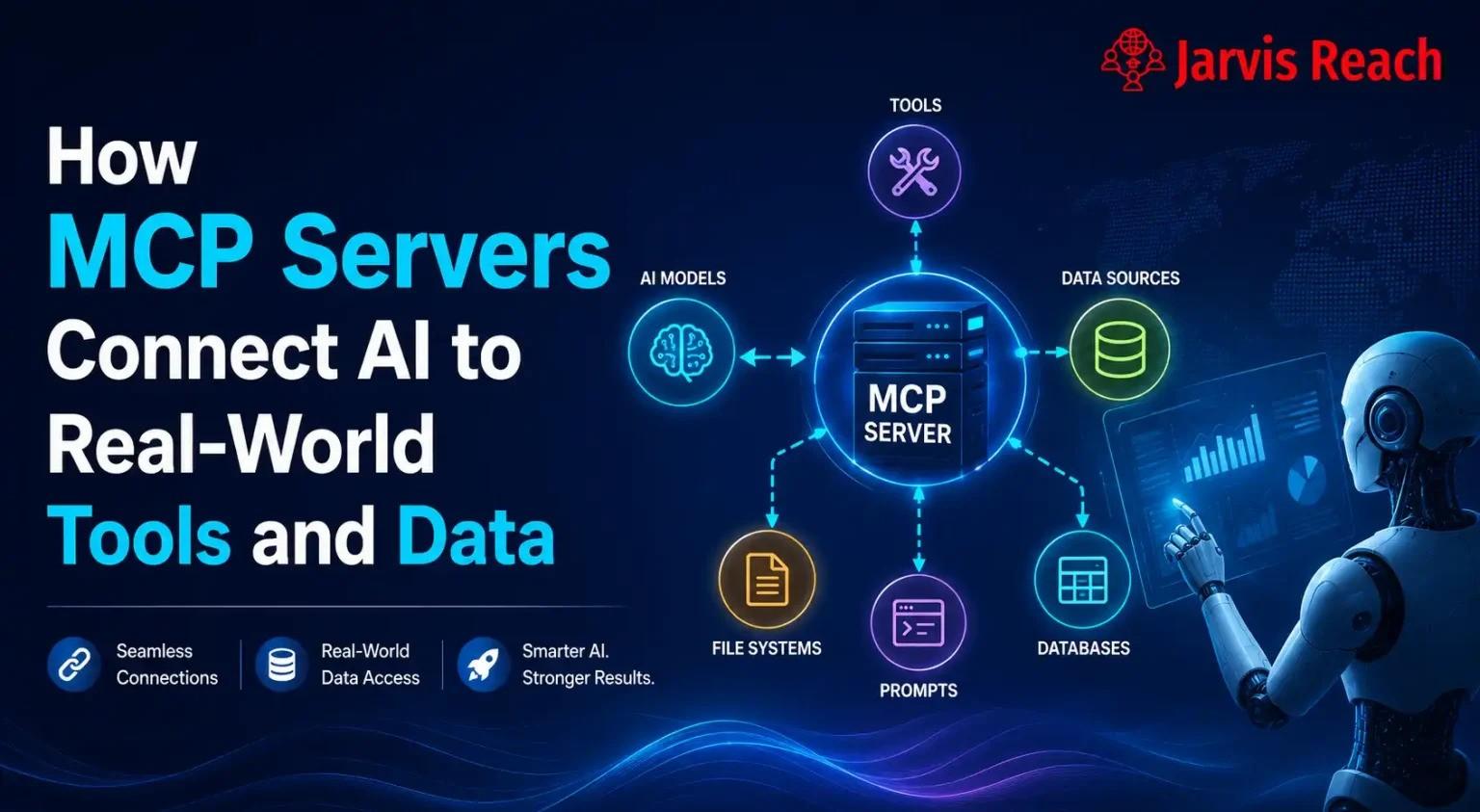
Artificial intelligence is changing how organizations automate tasks, analyze information, and improve productivity. However, AI models become far more valuable when they can access real-time information from business systems. An MCP Server provides the secure communication layer that connects AI applications with APIs, SQL databases, enterprise data, file systems, and other external resources.
Instead of creating separate integrations for every service, developers can use a single protocol to simplify AI connectivity. This approach improves scalability, reduces development effort, and creates a reliable architecture for modern AI platforms.
What Is an MCP Server?
An MCP Server is a server that implements the Model Context Protocol (MCP), allowing AI applications to communicate with external systems using a standardized interface. It securely exchanges information between AI models and business resources while managing authentication, permissions, and structured responses.
Because every integration follows the same protocol, organizations can connect multiple services without building custom connectors for each one.
Common systems connected through an MCP Server include:
- APIs
- SQL databases
- Enterprise data
- File systems
- CRM platforms
- ERP software
- Cloud applications
- Internal backends
How an MCP Client Works
An MCP Client acts as the communication bridge between an AI application and the MCP Server. Whenever the AI requires external information, the client sends a request to the server.
A typical workflow looks like this:
- A user submits a question.
- The AI determines external data is needed.
- The MCP Client sends a request.
- The MCP Server authenticates the request.
- The server retrieves information from an API or SQL database.
- Structured data is returned to the AI.
- The AI generates an accurate response.
This architecture keeps AI applications modular while improving security and maintainability.
Why APIs Matter
Nearly every business application exposes functionality through an API. Customer management systems, payment gateways, cloud storage, analytics tools, and communication platforms all rely on APIs.
An MCP Server simplifies API integration by acting as a universal gateway between AI models and external services.
Benefits include:
- Faster development
- Easier maintenance
- Standardized communication
- Better scalability
- Improved reliability
As businesses adopt more software, additional APIs can be integrated without redesigning the AI platform.
Accessing Enterprise Data Securely
Modern organizations generate massive amounts of enterprise data across departments. Sales, finance, operations, and customer support all maintain valuable information that AI can use.
An MCP Server securely connects AI applications with enterprise data while enforcing authentication and user permissions.
Examples include:
- Customer information
- Product catalogs
- Sales reports
- Employee records
- Business analytics
- Inventory management
This enables employees to retrieve accurate information using natural language instead of manually searching multiple systems.
SQL Databases and Structured Information
Many organizations depend on SQL databases to store business-critical information.
Using an MCP Server, AI applications can:
- Search customer records
- Generate reports
- Retrieve transaction history
- Analyze structured data
- Create summaries
- Support decision-making
Direct database connectivity enables AI assistants to deliver accurate responses using live organizational data.
Managing Multiple Data Sources
Business information rarely exists in one location. Organizations use cloud applications, spreadsheets, APIs, CRM systems, document repositories, and internal software.
An MCP Server combines these data sources into one standardized interface.
Rather than manually gathering information, AI assistants retrieve and combine data automatically, improving both efficiency and accuracy.
Prompt Templates Improve Productivity
Reusable prompt templates help organizations standardize AI interactions.
Instead of writing prompts repeatedly, businesses can create templates for common workflows.
Benefits include:
- Consistent AI responses
- Faster deployment
- Reduced prompt engineering
- Better collaboration
- Improved productivity
Prompt templates are widely used in customer support, content creation, coding assistants, and enterprise knowledge systems.
Stateless vs Stateful MCP Servers
Organizations can deploy an MCP Server using either a stateless or stateful architecture.
A stateless server processes every request independently. Because it stores no session information, it provides excellent scalability and performance.
A stateful server remembers previous interactions, making it ideal for conversational AI, chatbots, customer support, and workflow automation where context matters.
Selecting the right architecture depends on application requirements.
Authentication and Security
Security is one of the biggest advantages of an MCP Server.
Every request passes through authentication, ensuring that only authorized users and applications can access enterprise resources.
Authentication helps organizations:
- Protect sensitive enterprise data
- Secure API communication
- Prevent unauthorized access
- Manage user permissions
- Meet compliance requirements
Combined with encrypted communication, authentication enables safe AI deployment across enterprise environments.
File Systems and Backends
Many businesses store valuable information in documents instead of databases.
An MCP Server can connect directly to file systems, allowing AI assistants to search PDFs, Word documents, spreadsheets, technical manuals, and internal knowledge bases.
The server also integrates with business backends, including ERP systems, CRM software, cloud storage, and analytics platforms.
This creates a unified environment where AI can access both structured and unstructured information.
Benefits of MCP Server
Organizations implementing MCP Server gain several advantages:
- Standardized AI integration
- Secure authentication
- Faster API connectivity
- Access to enterprise data
- SQL database integration
- Multiple data source support
- Prompt template management
- File system connectivity
- Stateless and stateful deployment
- Scalable AI platform architecture
These capabilities reduce development complexity while increasing the effectiveness of AI applications.
Conclusion
An MCP Server is becoming an essential component of enterprise AI. By connecting AI applications with APIs, SQL databases, enterprise data, file systems, and business backends, it provides a secure and scalable integration framework.
Whether you're building an intelligent chatbot, an enterprise search assistant, or an advanced automation platform, MCP Server simplifies connectivity while improving authentication, flexibility, and performance. As AI adoption continues to grow, organizations that implement MCP Server will be better positioned to deliver reliable, context-aware, and data-driven AI experiences.
Frequently Asked Questions
What is an MCP Server?
An MCP Server is a standardized server that enables AI applications to communicate securely with APIs, databases, enterprise systems, and file systems.
What is an MCP Client?
An MCP Client sends requests from an AI application to the MCP Server and receives structured responses.
Can MCP Server connect to SQL databases?
Yes. MCP Server supports secure integration with SQL databases for querying structured business data.
Why is authentication important in MCP Server?
Authentication ensures only authorized users and applications can access enterprise data and connected resources.
Does MCP Server support file systems?
Yes. MCP Server can connect to file systems, allowing AI to search documents, reports, spreadsheets, and knowledge repositories securely.

 Bangla