


How Can Maotian 5" Air Random Orbital Sander Improve Workshop Finishing
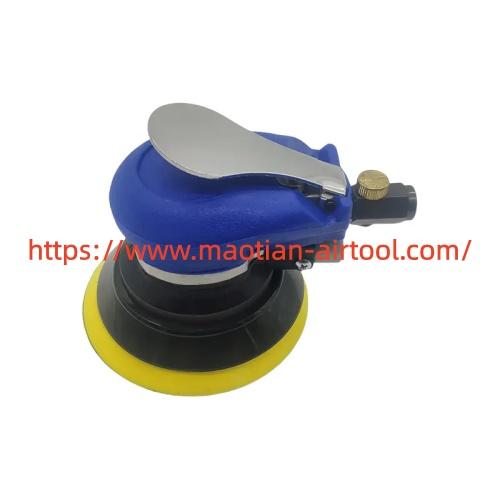
5" Air Random Orbital Sander can affect surface finishing in several practical ways, especially when the work requires controlled material removal and a consistent preparation process. The five inch pad size offers a useful balance between coverage and handling, while the random movement helps distribute abrasion across the work area. This type of motion is commonly used for preparing wood, metal, fiberglass, body filler, and painted surfaces before later finishing stages.
One important factor is the movement pattern. Instead of following one repeated circular path, the pad combines rotation with orbital movement. This helps distribute sanding action over a wider area and can reduce the visible patterns associated with more predictable sanding motions. For surface preparation, that matters because an uneven scratch pattern may become easier to notice after paint, stain, or another coating is applied.
The size of the pad also affects handling. A five inch format is practical for many automotive panels, furniture parts, cabinets, and medium sized workpieces. It can cover enough area for efficient preparation while remaining manageable around edges and shaped sections. Operators can move across a panel with controlled passes instead of relying heavily on hand sanding for every stage.
Pressure is another part of the finishing equation. Pressing too hard can slow the pad and create uneven abrasion. A lighter and steady hand generally allows the abrasive to work as intended. Keeping the pad level against the workpiece also helps maintain a more uniform contact area. Good technique is therefore just as important as the tool itself.
Abrasive selection should match the condition of the material. Coarser grades can help with initial material removal, while finer grades are commonly used when preparing a surface for paint, stain, or other finishing treatments. Moving through suitable grades rather than relying on one abrasive can make the preparation process easier to manage. Fresh abrasive is also useful because worn material can reduce cutting action and encourage additional pressure.
Dust management has a direct connection with surface preparation. Sanding creates fine particles that can settle back onto the workpiece or remain around the working area. Vacuum compatible designs can help move this debris away from the sanding zone. Cleaner preparation can make it easier to inspect the surface before applying another coating or moving to the next production step. Industry tools are available with both vacuum and non vacuum configurations, allowing workshops to choose according to their setup.
For automotive work, pneumatic sanding equipment can be useful when preparing body filler, removing old coating material, smoothing repaired areas, or preparing panels before refinishing. The same general approach applies to woodworking. A controlled sanding process can remove machining marks, smooth uneven areas, and prepare timber or composite materials for staining and coating. Woodworking references also note that random orbital tools are commonly used to prepare workpieces before finishing.
Maotian focuses on practical pneumatic tools for workshop applications where handling, sanding control, and surface preparation are important. The value of a sanding tool is not based only on rotational speed. Air consumption, operating pressure, pad movement, weight, grip design, vibration control, and compatibility with sanding discs can all affect the working experience. Current pneumatic models on the market commonly include features such as speed regulation and different pad configurations for specific applications.
Before starting a project, users should also check compressor capacity, air hose specifications, abrasive compatibility, and the recommended operating conditions of the equipment. Matching the pneumatic system with the tool helps maintain stable operation during longer sanding sessions. Operators should also wear appropriate protective equipment and follow the manufacturers safety instructions for the specific material and application.
Surface finishing is ultimately a process of controlled preparation. The tool provides the motion, but the final result depends on abrasive selection, pressure, movement speed, dust management, and inspection between stages. For workshops seeking a practical pneumatic option for routine preparation and finishing work, Maotian provides product information and application details through its product range at https://www.maotian-airtool.com/product/ where users can review available solutions according to their sanding requirements.

 Bangla