


Ceramic Plates For Industrial Equipment | Zfcera
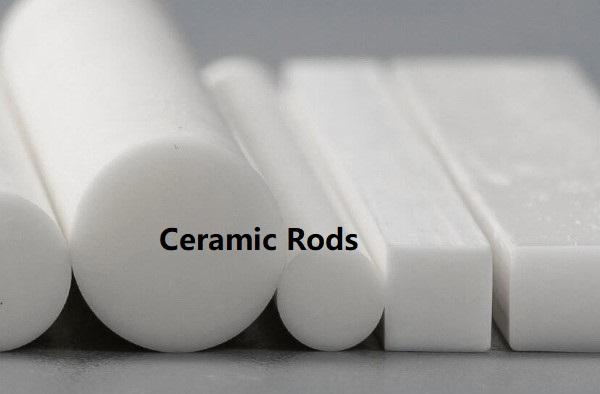
Industrial equipment often requires materials that can maintain stable performance under heat, electrical stress, friction, and demanding environmental conditions. In these applications, Ceramic Plates can provide useful characteristics such as hardness, thermal stability, electrical insulation, and corrosion resistance. Properly designed Ceramic Plates can be adapted for support components, insulation sections, protective barriers, equipment structures, and precision assemblies where conventional materials may not provide the required performance.
Understanding Technical Ceramic Performance
Technical ceramics are developed for specific engineering requirements rather than simple decorative purposes. Their properties depend on the selected material, manufacturing process, dimensions, surface condition, and intended application.
One major advantage of advanced ceramic materials is hardness. This property allows components to resist scratching, abrasion, and surface wear in environments involving repeated contact or mechanical movement.
Thermal stability is another important consideration. Certain ceramic materials can maintain their structural characteristics under elevated temperatures, making them suitable for selected industrial equipment exposed to heat.
Electrical insulation can also be an important reason for choosing technical ceramics. Components manufactured from suitable ceramic materials can separate electrically active sections while maintaining mechanical support.
Chemical resistance adds further value in demanding environments. When equipment is exposed to corrosive substances or harsh operating conditions, an appropriate ceramic material can provide a stable surface over extended periods.
Selecting the Right Material
Different industrial applications require different combinations of properties. Material selection should therefore begin with the actual working environment.
Alumina, for example, is widely considered when hardness, insulation, wear resistance, and thermal performance are important. Other engineering ceramics may be selected when projects require different mechanical, thermal, or electrical characteristics.
Component thickness also influences the final design. Thin sections may be suitable for insulation or separation, while thicker structures may be needed for support or protection.
Dimensions should match the equipment where the component will be installed. Length, width, thickness, holes, slots, corners, and other features may need to follow precise engineering drawings.
Surface requirements should also be considered. Some assemblies require smooth contact surfaces, while other applications may focus more strongly on dimensional accuracy or wear resistance.
By defining these requirements before production, engineers can select a material and structure that are better suited to the final application.
Zfcera Precision Manufacturing Process
Manufacturing quality has a direct influence on the performance of technical ceramic components. Production generally begins with carefully prepared ceramic powders, followed by forming and high-temperature sintering.
Different forming technologies may be selected according to the required geometry and production volume. Pressing methods can be appropriate for various flat structures, while other techniques may be used for more complicated designs.
After sintering, precision machining may be required to achieve final dimensions. Because technical ceramics are extremely hard, specialized machining processes are often needed for accurate finishing.
Grinding can be used to refine surfaces and dimensions, while drilling and milling can create specific holes, slots, and profiles. More complex components may require CNC processing or additional finishing operations.
Quality inspection is equally important. Dimensional accuracy, flatness, surface condition, and other technical requirements should be checked before components are released for use.
For customized projects, detailed drawings and application information can help manufacturers understand the required geometry and performance targets.
Applications in Modern Equipment
Advanced ceramic structural components can be used in a wide range of industrial sectors.
In electrical and electronic equipment, they can function as insulating substrates, support sections, separators, or mounting structures where electrical isolation is required.
In mechanical equipment, their hardness and wear resistance can make them useful in areas exposed to repeated friction or contact. They may also serve as protective components in environments where surface durability is important.
High-temperature equipment can benefit from ceramic components because suitable ceramic materials can remain stable under conditions that may affect polymers or certain metals.
These components may also be found in laboratory systems, semiconductor equipment, industrial furnaces, electronic manufacturing systems, and specialized machinery.
The specific application determines the appropriate material and design. A component intended for electrical insulation may have very different requirements from one used for mechanical wear protection.
This makes customized production valuable for applications where standard dimensions cannot provide the required fit.
From Design to Finished Component
A successful ceramic component project begins with a clear understanding of operating conditions. Engineers should consider temperature, mechanical stress, electrical requirements, chemical exposure, dimensional limitations, and installation conditions.
Prototype development can help verify the design before larger production. A sample allows engineers to check dimensions, assembly compatibility, surface condition, and overall suitability.
If modifications are required, dimensions or machining details can be adjusted before production is expanded. This can help reduce unnecessary manufacturing changes.
Handling and transportation should also be considered. Although technical ceramics are highly resistant to wear and heat, they can be brittle when subjected to impact. Appropriate packaging can help protect corners, edges, and finished surfaces.
Communication between the buyer and manufacturer is therefore important. Providing information about operating conditions and technical requirements can help ensure that the finished component matches its intended application.
With suitable material selection, accurate forming, controlled sintering, and precision machining, technical ceramic components can provide practical solutions for demanding industrial environments. To explore structural ceramic products and customized manufacturing options, visit https://www.zfcera.com/ .

 Bangla