


Quick Turnaround Jacket Back Digitizing: Boost Results 3X
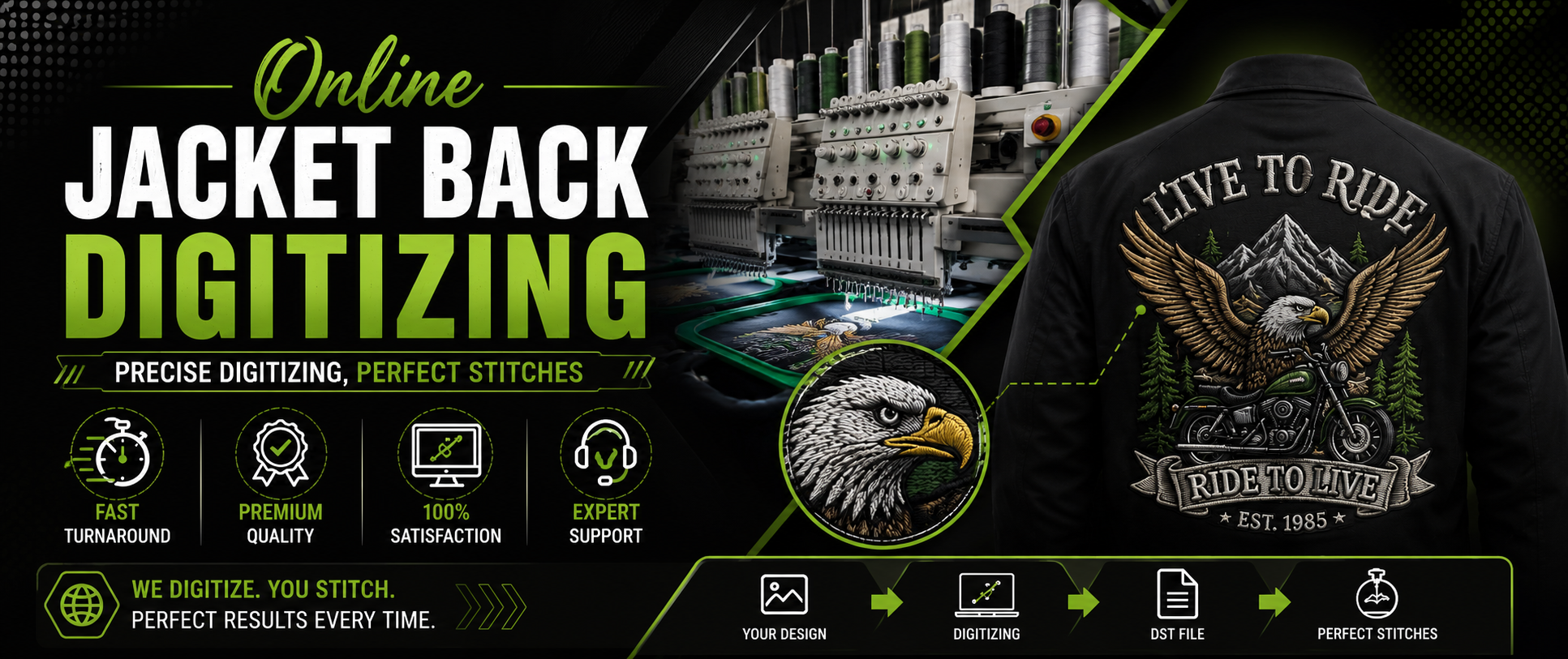
Quick Turnaround Jacket Back Digitizing for Better Designs
Jacket back embroidery needs careful planning, clean stitching, and accurate file preparation. Large designs cover more fabric than small chest or sleeve logos, so even minor digitizing mistakes can affect the final look. A well-prepared embroidery file helps the machine follow the design smoothly while keeping details sharp and balanced.
For businesses, clothing brands, sports teams, clubs, and individuals, speed also matters. Customers often want their jackets ready within a short time, especially when designs are needed for events, uniforms, launches, or special occasions. Quick Turnaround Jacket Back Digitizing helps reduce waiting time while maintaining the quality needed for large embroidery projects.
The goal is not simply to finish a file quickly. The goal is to prepare a file that performs well on the embroidery machine and produces a professional result on the jacket.
Plan the Design Before Stitching
Large jacket-back artwork should be planned before digitizing begins. The design size, fabric type, thread colors, lettering, and important details all influence the final embroidery.
A large design can contain many elements, including names, logos, symbols, artwork, and decorative borders. If everything is converted directly without proper planning, the final embroidery may become too dense or difficult for the machine to handle.
Good planning starts with understanding the artwork. The digitizer should identify the main elements and decide which details need stronger stitch coverage. Small details may need adjustments so they remain visible after stitching.
Design planning also helps control stitch count. Too many stitches can increase production time and place unnecessary stress on the fabric. A balanced design can provide strong visual impact without creating excessive density.
Improve Stitch Quality With Smart Settings
Embroidery quality depends heavily on stitch settings. Large jacket designs require careful control of stitch direction, density, underlay, and pull compensation.
Stitch direction can influence how light reflects from the thread. When directions are selected correctly, different sections of the design can stand apart and create a more polished appearance.
Underlay provides support beneath the visible stitches. It helps stabilize the fabric and gives the top layer a stronger foundation. However, excessive underlay can increase density and make the design feel heavy.
Pull compensation is another important factor. During embroidery, thread can pull the fabric slightly inward. Proper compensation helps maintain the intended shape of letters, borders, and other design elements.
These settings should be selected according to the artwork and material instead of applying the same settings to every project.
Use Instant Jacket Back Digitizing When Needed
Instant Jacket Back Digitizing can be useful when customers have tight production schedules. Fast service allows businesses to move from artwork approval toward embroidery production without unnecessary delays.
However, speed should never mean skipping important quality checks. A fast workflow should include artwork review, file preparation, digitizing, testing, and final inspection.
Digital artwork may look perfect on a computer screen but behave differently when converted into stitches. Some thin lines may disappear, small letters may become difficult to read, and overlapping sections can create unnecessary bulk.
A skilled digitizing process anticipates these problems before the file reaches the embroidery machine. This can save time because fewer corrections are needed later.
Choose the Right Fabric Settings
Jacket materials can vary greatly. Denim, canvas, leather-style materials, nylon, cotton blends, and other fabrics each react differently during embroidery.
A design that works well on one material may require adjustments for another. Fabric thickness, stretch, stability, and surface texture can all affect stitching.
For example, a stable heavy fabric may support dense embroidery better than a lightweight material. A flexible fabric may require additional support to prevent distortion.
Choosing the correct settings helps reduce puckering and keeps the design aligned. It also improves the appearance of large lettering and detailed artwork.
The backing material matters as well. Proper backing can stabilize the jacket and support the stitches during machine operation. The correct combination of fabric, backing, needle, thread, and digitizing settings can create a much cleaner result.
Reduce Errors Before Production
One of the easiest ways to save time is to identify possible problems before production starts. Reviewing the embroidery file can prevent unnecessary rework.
A quality check should examine the overall design shape, stitch sequence, thread changes, density, lettering, and small details. The digitizer should also check whether the design contains unnecessary jumps or trims.
Large jacket-back designs may take longer to stitch because of their size. If the file contains inefficient stitch paths, production time can increase further.
An efficient sequence allows the machine to move logically through the artwork. Fewer unnecessary movements can improve production efficiency while reducing interruptions.
File compatibility is another important consideration. The final embroidery file should match the machine format required for production. Correct file preparation helps prevent technical problems when the design is loaded.
Keep Large Designs Easy to Read
Jacket-back embroidery often communicates a message from a distance. This makes readability especially important.
Large names, team identities, company logos, and artwork should have enough separation between elements. Crowded details can make the design difficult to understand.
Lettering requires special attention. Font selection, letter height, spacing, and stitch direction can all influence readability. Very small lettering may need simplification so the embroidered version remains clear.
The same principle applies to logos. Fine lines that look visible in digital artwork may not remain clear after stitching. Simplifying selected elements can sometimes produce a stronger embroidered result.
The objective is to preserve the identity of the original artwork while adapting it for thread.
Make the Workflow Faster
Quick Turnaround Jacket Back Digitizing becomes more effective when the entire workflow is organized. Faster results come from reducing avoidable delays rather than rushing the digitizing stage.
Artwork should be supplied in the clearest possible format. Important instructions, such as finished size, jacket material, thread colors, and placement, should be confirmed early.
Clear communication can reduce repeated revisions. When the digitizer understands the customer's expectations from the beginning, the file can be prepared more efficiently.
A structured workflow may include artwork review, design planning, digitizing, quality inspection, revision, and final file delivery. Each stage has a purpose, and skipping one can create problems later.
Technology can also support faster production. Modern embroidery software provides tools for stitch editing, sequencing, density adjustments, lettering, and design optimization. Using these tools properly can improve both speed and accuracy.
Check the File Before Final Delivery
Before sending a finished embroidery file, the design should receive a final inspection. This is especially important for large jacket-back artwork because mistakes can become more visible after production.
The file should be checked for:
-
Correct overall size
-
Proper stitch sequence
-
Balanced density
-
Clean lettering
-
Suitable underlay
-
Correct thread colors
-
Appropriate machine format
-
Unnecessary jumps or trims
A preview or sample stitch-out can provide additional confidence. Testing reveals issues that may not be obvious when viewing the design only on a computer.
A test can show whether the fabric remains stable, whether details are readable, and whether the overall design has the intended appearance.
Deliver Better Results With Professional Support
Businesses that regularly create embroidered jackets need dependable digitizing support. A professional digitizer understands that every design has different requirements.
Quick Turnaround Jacket Back Digitizing can help businesses respond to customer orders faster while keeping large embroidery designs organized and production-ready. The service becomes more valuable when speed is combined with careful file preparation and quality control.
Professional support can also help when artwork needs changes before digitizing. A digitizer may suggest adjustments to tiny details, stitch density, lettering, or design placement to make the artwork more suitable for embroidery.
This approach protects the original design concept while improving its performance on fabric.
Get a Free Quote
Build a Stronger Embroidery Process
Good jacket embroidery starts long before the needle touches the fabric. It begins with suitable artwork, smart planning, correct settings, and an efficient digitizing workflow.
Large designs need special attention because they contain more stitches and cover a wider area. By controlling density, improving stitch direction, selecting suitable backing, and checking the file carefully, businesses can achieve cleaner and more consistent results.
Speed is valuable, but quality must remain part of the process. A rushed file that requires multiple corrections can take longer than a carefully prepared file.
The best approach is to combine efficient workflow with accurate digitizing. This allows customers to receive their files sooner without sacrificing the appearance or performance of the embroidery.
When every stage is handled carefully, jacket-back designs can look sharp, professional, and ready for reliable machine production. Quick Turnaround Jacket Back Digitizing gives businesses a practical way to manage urgent embroidery projects while maintaining a strong focus on quality, accuracy, and customer satisfaction.
Ready to get started? Get a Free Quote Now or Contact Us today to turn your ideas into stunning embroidered art.
Beyond embroidery, we also offer AI Digital Marketing Services in USA.
Author: Digit-it
Experts in Custom Embroidery Digitizing – Trusted by Clients Nationwide
Website: www.digit-it.com | Email: [email protected] |
Contact: +1(231)-821-5515
WhatsApp: +44 7598 989500
Secure, Professional, and Committed to Quality – View our About Page and Contact Information for Trust & Support.

 Bangla