


High-Protein Noodles Market to Grow Significantly, Reaching USD 9.2 Billion Valuation by 2036
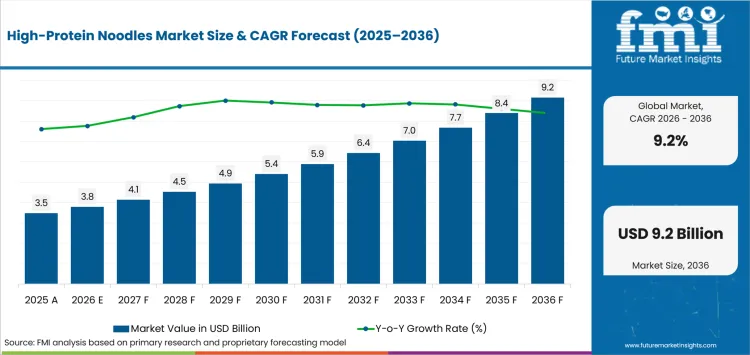
NEWARK, Del., August 19, 2026 — The global High-Protein Noodles Market is poised for significant expansion as consumers increasingly seek convenient foods that deliver higher protein content without requiring separate shakes, bars, or supplements. According to Future Market Insights (FMI), the market is projected to grow from USD 3.8 billion in 2026 to USD 9.2 billion by 2036, registering a CAGR of 9.2% during the forecast period.
Growing consumer focus on protein intake, rising demand for convenient nutrition, product innovation across instant and dried noodle formats, and increasing availability of wheat-legume and specialty protein formulations are expected to support market growth globally.
👉 Get Detailed Market Forecasts, Competitive Benchmarking, and Pricing Trends: https://www.futuremarketinsights.com/reports/sample/rep-gb-34744
The market is expected to create substantial opportunities between 2026 and 2036 as manufacturers develop products that combine credible protein contributions with familiar taste, texture, preparation time, and affordability.
Key High-Protein Noodles Market Highlights
· Market Size (2026): USD 3.8 Billion
· Forecast Market Size (2036): USD 9.2 Billion
· 2025 Market Size: USD 3.5 Billion
· Forecast Period: 2026–2036
· CAGR (2026–2036): 9.2%
· Leading Protein Source: Wheat Gluten – 29.7% in 2026
· Leading Product Type: Instant Ramen – 33.6% in 2026
· Leading Protein Content: 10–15 g/serving – 41.9% in 2026
· Leading Nature: Conventional – 55.8% in 2026
· Leading Sales Channel: Supermarkets & Hypermarkets – 31.4% in 2026
· Key Segments Covered: Protein Source, Product Type, Protein Content, Nature, Sales Channel
Analyst Viewpoint
Nandini Roy Choudhury, Principal Consultant at Future Market Insights, stated: “High-protein noodles need to clear two purchasing tests at once: a credible protein contribution and the texture, cook time and flavour consumers expect from noodles. Products that hold those attributes across instant and dried formats can earn repeat shelf and online listings.”
Why Is the High-Protein Noodles Market Growing?
The increasing consumer focus on protein consumption is creating strong demand for foods that integrate protein into familiar everyday meals. High-protein noodles offer consumers a convenient way to increase protein intake without adding a separate shake, bar, or supplement to their routine.
Manufacturers are responding by developing noodles using wheat gluten, legumes, plant proteins, protein blends, and other functional ingredients. Products are increasingly designed to maintain familiar preparation methods while improving nutritional profiles.
Consumer demand is also supported by the popularity of high-protein eating patterns, convenience foods, fitness-oriented nutrition, and better-for-you alternatives. However, successful products must balance protein density with taste, texture, sodium levels, carbohydrates, cooking time, and price.
Key Growth Drivers
· Rising consumer focus on protein intake
· Growing popularity of high-protein diets
· Increasing demand for convenient nutritional foods
· Expansion of functional and fortified noodle products
· Rising interest in plant-based and legume-based protein sources
· Product innovation across instant and dried noodle formats
· Growing availability through supermarkets, hypermarkets, specialty retailers, and online channels
Increasing consumer preference for familiar foods with improved nutritional profiles
Key Segment Insights
Which Protein Source Leads the High-Protein Noodles Market?
Wheat Gluten is estimated to account for 29.7% of the protein source category in 2026. Wheat-based protein systems remain important because they can support familiar noodle texture and preparation characteristics while increasing protein content.
Protein Source Highlights
· Wheat Gluten accounts for an estimated 29.7% share in 2026.
· Increasing use of wheat-legume combinations.
· Growing interest in plant-based protein systems.
· Manufacturers are focusing on protein density without compromising texture.
Why Is Instant Ramen Driving Product Demand?
Instant Ramen is estimated to account for 33.6% of the product type category in 2026. Its convenience, established consumer base, and rapid preparation make it an important platform for incorporating higher protein into everyday meals.
Product Type Highlights
· Instant Ramen represents an estimated 33.6% share in 2026.
· High-protein innovations are expanding across instant noodle formats.
· Manufacturers are upgrading familiar products with improved nutrition profiles.
· Convenience remains a major purchasing consideration.
What Protein Content Level Dominates the Market?
The 10–15 g/serving category is estimated to account for 41.9% of the protein content segment in 2026. This range provides a practical balance between meaningful protein contribution and the sensory characteristics consumers expect from noodles.
Protein Content Highlights
· 10–15 g/serving represents an estimated 41.9% share in 2026.
· Consumers increasingly evaluate protein per serving.
· Higher protein density is being paired with familiar preparation formats.
· Nutrition claims must be supported by acceptable taste and texture.
Why Does the Conventional Segment Continue to Lead?
The Conventional segment is projected to account for 55.8% of the nature category in 2026. Conventional products benefit from established consumer familiarity, broader availability, and mainstream retail penetration.
Nature Highlights
· Conventional products account for an estimated 55.8% share in 2026.
· Mainstream consumers continue to value familiar noodle formats.
· Innovation is increasingly focused on improving nutrition without changing the core eating experience.
· Specialty and alternative formulations continue expanding alongside conventional products.
How Are Supermarkets & Hypermarkets Influencing Market Growth?
Supermarkets & Hypermarkets are estimated to account for 31.4% of the sales channel category in 2026. These channels provide broad product visibility and allow consumers to compare protein content, pricing, brands, and nutritional claims directly at the point of purchase.
Sales Channel Highlights
· Supermarkets & Hypermarkets account for an estimated 31.4% share.
· Retail visibility remains important for mainstream adoption.
· Online and direct-to-consumer channels provide additional opportunities.
· Specialty retail continues supporting premium and targeted nutrition products.
Market Dynamics
Market Drivers
Growing consumer protein awareness, increasing popularity of high-protein diets, demand for convenient nutrition, innovation in plant-based and wheat-based protein systems, and expansion of functional noodle products continue supporting market growth.
Market Restraints
High-protein formulations may face challenges related to premium pricing, taste and texture compromises, formulation complexity, sodium content, consumer expectations, and the need to maintain affordability while increasing protein density.
Market Trends
Innovation continues transforming the High-Protein Noodles Market.
Major trends include:
· Expansion of high-protein instant ramen
· Increasing use of wheat-legume protein systems
· Development of plant-based protein noodles
· Growing demand for 10–15 g protein-per-serving products
· Nutrition-focused reformulation of familiar noodle products
· Expansion of convenient meal solutions
· Increasing focus on taste, texture, cook time, and nutritional balance
· Growth of direct-to-consumer and specialty nutrition platforms
Regional Outlook
The High-Protein Noodles Market is developing across major markets with adoption shaped

 Bangla