


How to Select the Right Cams for Circular Knitting Machines
Introduction
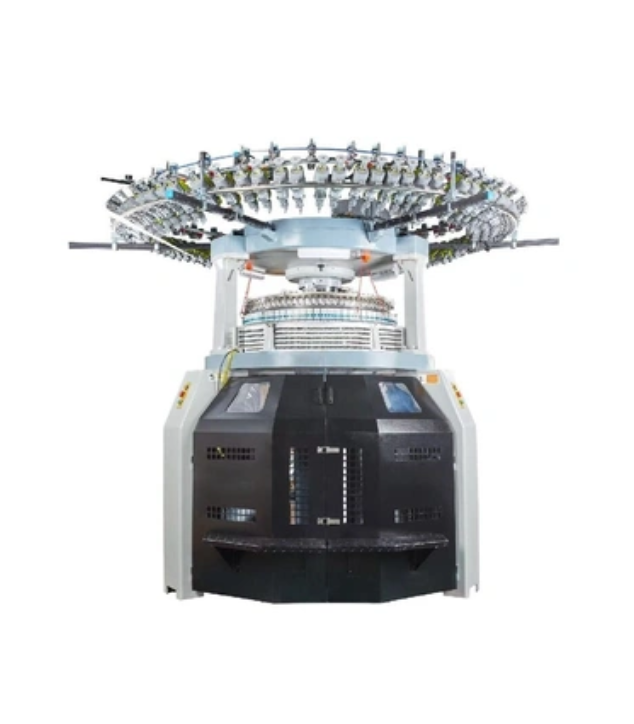
In the world of circular knitting, every component of the machine contributes to the quality, efficiency, and consistency of fabric production. Among these components, the cam is one of the most critical yet often overlooked parts. Although relatively small compared to the machine frame or cylinder, the cam directly determines the movement of knitting needles and sinkers, making it a key factor in stitch formation, fabric appearance, production speed, and machine reliability.
Modern circular knitting machines are capable of producing a wide variety of fabrics, from lightweight single jersey to complex jacquard, rib, interlock, fleece, and technical textiles. As production demands continue to increase, manufacturers expect higher machine speeds, better fabric consistency, lower maintenance costs, and longer service life. Achieving these goals depends heavily on selecting the correct cam system.
A poorly designed or improperly selected cam can lead to needle breakage, excessive vibration, yarn damage, uneven loops, fabric defects, and increased machine downtime. Conversely, a precision-engineered cam allows the machine to operate smoothly at high speeds while maintaining exceptional fabric quality and extending the lifespan of other knitting components.
This guide explains how circular knitting machine cams work, the different types available, the materials used in manufacturing, and the most important factors to consider when selecting cams for different knitting applications.

What Is a Cam in a Circular Knitting Machine?
A cam is a specially designed guide installed around the needle cylinder or dial that controls the movement of knitting needles and sinkers during the knitting cycle.
Unlike powered mechanical components, the cam itself remains stationary. As the cylinder rotates, the needle butts slide along the cam track, causing the needles to rise and fall in a precisely controlled sequence.
This carefully engineered movement enables the machine to perform several essential knitting operations, including:
- Clearing old loops
- Receiving new yarn
- Forming stitches
- Tucking loops
- Floating yarn
- Transferring loops
- Releasing completed stitches
Every knitting action depends on the cam profile. Even slight deviations in the cam geometry can significantly affect stitch formation and fabric quality.
Types of Circular Knitting Machine Cams
Circular knitting machines typically employ several different types of cams, each performing a specific function.
Needle Raising Cam
The raising cam lifts the knitting needle upward until it reaches the required knitting height. During this movement, the needle clears the previous loop and becomes ready to receive new yarn.
The lifting height directly affects:
- Stitch formation
- Yarn feeding
- Needle tension
- Loop consistency
Accurate raising cam design ensures smooth needle motion without excessive impact.
Stitch Cam
The stitch cam controls the downward movement of the needle after yarn feeding.
This movement determines:
- Stitch length
- Fabric density
- Fabric weight
- Loop appearance
Modern machines often allow stitch cams to be adjusted externally, enabling operators to modify stitch length without replacing the cam.
Guard Cam
Guard cams stabilize needle movement and prevent unnecessary vibration during high-speed knitting.
They help ensure:
- Smooth needle guidance
- Reduced needle wear
- Improved knitting stability
- Longer machine life
Sinker Cam
Sinkers play an equally important role in loop formation.
The sinker cam controls sinker movement during:
- Loop holding
- Loop knocking-over
- Yarn positioning
- Fabric take-down
Well-designed sinker cams minimize yarn friction while ensuring proper stitch formation.
Tuck Cam
Certain knitted fabrics require tuck stitches instead of standard knit stitches.
The tuck cam controls partial needle movement so the old loop remains on the needle while a new loop is added.
Applications include:
- Jacquard fabrics
- Pattern knitting
- Functional textiles
- Decorative fabrics
Float Cam
Float cams are used when needles intentionally skip knitting to create floating yarn structures.
These are commonly found in:
- Jacquard machines
- Pattern knitting
- Decorative knitting
- Double jersey machines

Why Cam Selection Matters
Selecting the correct cam is not simply a matter of replacing worn parts.
Different fabrics require completely different needle motions, knitting depths, and timing sequences.
An inappropriate cam profile may cause:
- Uneven stitch length
- Yarn breakage
- Needle damage
- Fabric streaks
- Excessive machine vibration
- High operating temperatures
- Reduced production speed
Proper cam selection directly improves:
- Fabric quality
- Machine productivity
- Energy efficiency
- Component lifespan
- Production consistency
Selecting Cam Curves for Different Fabrics
One of the first considerations when choosing a cam is its curve profile.
The cam curve determines how quickly or slowly the needle moves throughout the knitting cycle.
Different textile structures require different motion characteristics.
For example:
Single Jersey Fabrics
Single jersey fabrics require relatively smooth needle movement with moderate lifting speed to ensure stable stitch formation.
The cam curve should minimize unnecessary acceleration.
Rib Fabrics
Rib knitting uses both cylinder and dial needles.
These machines require carefully synchronized cam curves to ensure both needle sets work together without collision.
Interlock Fabrics
Interlock knitting demands even greater precision because the needles must interlock perfectly.
The cam profile must reduce vibration while maintaining accurate timing.
Fleece Fabrics
Fleece machines typically require deeper sinker movement and longer needle travel.
Special cam profiles allow proper yarn insertion for pile formation.
Jacquard Fabrics
Jacquard knitting involves selective needle operation.
Complex cam systems coordinate multiple knitting actions while maintaining pattern accuracy.
Material Selection Is Critical
Because cams experience continuous mechanical contact with needle butts and sinkers, material selection greatly influences durability.
Each needle passes over the cam thousands of times every minute.
Over months or years of operation, this creates:
- Sliding friction
- Contact pressure
- Heat generation
- Surface fatigue
- Mechanical wear
Therefore, cams must be manufactured from high-strength alloy tool steel.
Why Cr12MoV Steel Is Widely Used
Many premium circular knitting machine manufacturers use Cr12MoV tool steel for cam production.
Cr12MoV offers several advantages:
Excellent Wear Resistance
The material maintains its profile even after millions of knitting cycles.
High Hardness
After heat treatment, Cr12MoV achieves excellent hardness while retaining sufficient toughness.
Good Dimensional Stability
Heat treatment causes minimal deformation, ensuring precision cam geometry.
Superior Fatigue Strength
Repeated needle impacts generate cyclic stress.
Cr12MoV withstands these stresses without premature cracking.
Long Service Life
Its balanced mechanical properties significantly extend operating life compared with ordinary carbon steel.
Importance of Proper Heat Treatment
Material quality alone cannot guarantee cam performance.
Heat treatment plays an equally important role.
Professional manufacturers perform carefully controlled:
- Vacuum hardening
- Tempering
- Stress relieving
- Precision grinding
Improper heat treatment may result in:
- Surface cracking
- Excessive brittleness
- Premature wear
- Dimensional distortion
Recommended Cam Hardness
Industry practice generally specifies cam hardness around:
HRC 63.5 ± 1
This hardness range provides an ideal balance between wear resistance and toughness.
If hardness is too low:
- Rapid wear occurs.
- Cam profiles become inaccurate.
- Stitch consistency deteriorates.
If hardness is too high:
- The cam becomes brittle.
- Chipping and cracking become more likely.
- Needle damage may increase.
Maintaining the recommended hardness ensures reliable long-term performance.
Surface Roughness Has a Major Influence
Many buyers focus only on hardness while overlooking surface finish.
However, the surface roughness of the cam working curve significantly affects machine performance.
Needle butts slide continuously along the cam surface.
If the surface is rough:
- Friction increases.
- Heat builds up.
- Lubrication becomes less effective.
- Needles wear more rapidly.
A precision-polished surface allows smooth needle travel with minimal resistance.
Recommended Surface Finish
High-quality cams typically achieve a working surface roughness of:
Ra ≤ 0.8 μm
Such precision finishing reduces:
- Needle butt wear
- Heat generation
- Friction
- Power consumption
- Machine noise
It also improves stitch consistency during high-speed operation.
Precision Machining Makes the Difference
The final quality of a cam depends not only on raw material but also on manufacturing precision.
High-end cam production involves:
- CNC machining
- Precision milling
- Profile grinding
- Coordinate measurement
- Surface polishing
- Final inspection
Each process ensures the cam profile matches the original engineering design within extremely tight tolerances.
Common Problems Caused by Poor-Quality Cams
Using low-cost or poorly manufactured cams often results in production problems that outweigh any initial savings.
Common issues include:
Needle Heel Wear
A rough or inaccurate cam profile rapidly wears the needle butt.
Needles require more frequent replacement.
Excessive Heat
Poor surface finish increases friction between the needle butt and cam.
This causes localized heating that accelerates wear.
Fabric Defects
Incorrect needle movement may produce:
- Vertical lines
- Horizontal barré
- Uneven loops
- Missed stitches
- Hole defects
Machine Vibration
Inaccurate cam geometry creates unstable needle motion, increasing vibration and operating noise.
Reduced Production Speed
Machines equipped with inferior cams often cannot operate at their intended rotational speed without compromising fabric quality.
Choosing Cams According to Machine Speed
Machine speed should also influence cam selection.
Standard-Speed Machines
For moderate production speeds, conventional cam profiles generally provide satisfactory performance.
High-Speed Machines
High-speed circular knitting machines require optimized cam curves that reduce needle acceleration and impact loads.
These designs improve:
- Needle life
- Machine stability
- Fabric consistency
- Production efficiency
Compatibility with Needles and Sinkers
A cam should never be selected independently.
It must be compatible with:
- Needle specifications
- Needle butt dimensions
- Sinker design
- Cylinder gauge
- Machine diameter
- Knitting application
Even minor dimensional mismatches can produce severe operational problems.
Maintenance Considerations
Proper maintenance significantly extends cam life.
Recommended practices include:
- Regular lubrication
- Cleaning lint and dust
- Inspecting wear patterns
- Replacing damaged needles promptly
- Checking alignment during maintenance
Routine inspections help identify early signs of wear before they affect production.
Selecting a Reliable Cam Manufacturer
Not all cam manufacturers offer the same level of engineering expertise.
When evaluating suppliers, consider the following factors:
Manufacturing Experience
Established manufacturers usually possess extensive knowledge of various knitting machine brands and fabric applications.
Material Certification
Choose suppliers that provide certified tool steel with verified chemical composition and mechanical properties.
Advanced Machining Equipment
Modern CNC equipment ensures greater dimensional accuracy and repeatability.
Heat Treatment Capability
Professional in-house heat treatment improves quality control and consistency.
Quality Inspection
Reliable manufacturers conduct comprehensive inspections, including:
- Hardness testing
- Dimensional measurement
- Surface roughness testing
- Profile inspection
Custom Engineering Support
Different fabrics may require customized cam profiles.
Experienced suppliers can recommend or develop specialized cam designs based on production requirements.
Future Trends in Circular Knitting Machine Cam Technology
As textile manufacturing continues to evolve, cam technology is advancing alongside machine automation and intelligent manufacturing.
Emerging developments include:
- High-performance alloy materials with enhanced wear resistance
- Precision CNC profile grinding for tighter tolerances
- Advanced vacuum heat treatment processes
- Low-friction surface coatings to reduce wear
- Computer-aided cam profile optimization
- Digital simulation for improved needle motion analysis
- Integration with high-speed, energy-efficient knitting systems
These innovations help manufacturers achieve greater productivity, longer component life, reduced maintenance, and consistently high fabric quality in increasingly demanding production environments.
Conclusion
Although cams represent only a small portion of a circular knitting machine, they play a decisive role in knitting precision, production efficiency, and fabric quality. Every movement of the needle and sinker is guided by the cam profile, making its design, material, hardness, and surface finish essential factors in machine performance.
When selecting circular knitting machine cams, manufacturers should evaluate the intended fabric type, machine speed, cam curve design, material quality, heat treatment process, hardness, surface roughness, machining precision, and compatibility with needles and sinkers. Investing in high-quality, precision-engineered cams not only reduces maintenance costs and extends machine life but also ensures stable production, superior fabric consistency, and higher overall productivity.
As circular knitting technology continues to advance toward faster, smarter, and more automated manufacturing, precision cam engineering will remain a fundamental element in delivering reliable, efficient, and high-quality textile production for years to come.

 Bangla