


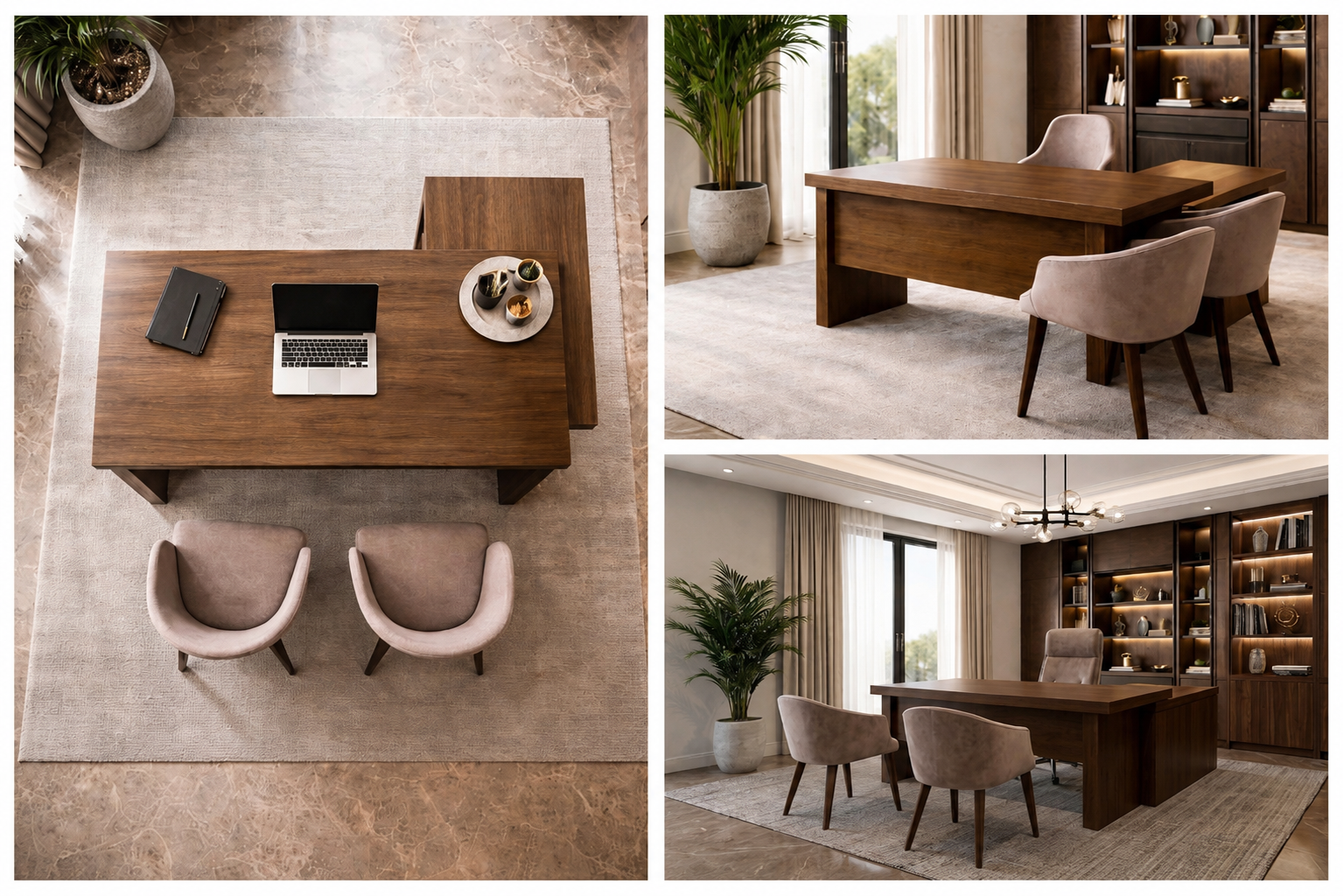
An office desk is one of the few pieces of furniture that directly affect how productive a workspace feels, yet it is often chosen last ,after the chair, the lighting, even the wall color. That ordering tends to backfire because the desk’s footprint, height, and layout determine almost everything else about how a room functions as a workspace. At its simplest, a desk is just a flat working surface raised to a comfortable height, but the demands placed on a modern computer desk go well beyond holding a laptop. Cable management, monitor placement, and enough clearance for a keyboard and mouse have become baseline requirements, which is why office desk design increasingly factors in built-in grommets for wires and shallow drawers positioned within easy reach rather than buried below. Shape is one of the more practical decisions buyers face. A traditional desk works well in a dedicated home office or a corner of a bedroom, offering a straightforward rectangular surface that fits most rooms without dominating them. An L-shaped desk, on the other hand, wraps around a corner to roughly double the usable surface area within the same floor footprint ,a configuration particularly useful for anyone splitting a single desk between a primary monitor setup and paperwork or secondary tasks. Material matters more for desks than for almost any other piece of office furniture, since the surface absorbs daily wear from typing, writing, and repeated object placement. A wooden desk, especially one finished with a hardwearing lacquer or oil seal, resists the scuffing and heat marks that laminate surfaces are prone to over time ,a difference that becomes noticeable after a few years of regular use, particularly under hot laptops or mugs set down without coasters. As remote and hybrid work have become permanent fixtures for many households, modern office desk design has also adapted toward smaller footprints and multi-room flexibility ,a desk that can move from a study to a bedroom corner without losing its function. Choosing the right size and configuration upfront tends to matter more for long-term comfort than any single feature added later. To explore wooden and L-shaped configurations in person, visit the office desk collection at Twigs Direct.
An office desk is one of the few pieces of furniture that directly affect how productive a workspace feels, yet it is often chosen last ,after the chair, the lighting, even the wall color. That ordering tends to backfire because the desk’s footprint, height, and layout determine almost everything else about how a room functions as a workspace. At its simplest, a desk is just a flat working surface raised to a comfortable height, but the demands placed on a modern computer desk go well beyond holding a laptop. Cable management, monitor placement, and enough clearance for a keyboard and mouse have become baseline requirements, which is why office desk design increasingly factors in built-in grommets for wires and shallow drawers positioned within easy reach rather than buried below. Shape is one of the more practical decisions buyers face. A traditional desk works well in a dedicated home office or a corner of a bedroom, offering a straightforward rectangular surface that fits most rooms without dominating them. An L-shaped desk, on the other hand, wraps around a corner to roughly double the usable surface area within the same floor footprint ,a configuration particularly useful for anyone splitting a single desk between a primary monitor setup and paperwork or secondary tasks. Material matters more for desks than for almost any other piece of office furniture, since the surface absorbs daily wear from typing, writing, and repeated object placement. A wooden desk, especially one finished with a hardwearing lacquer or oil seal, resists the scuffing and heat marks that laminate surfaces are prone to over time ,a difference that becomes noticeable after a few years of regular use, particularly under hot laptops or mugs set down without coasters. As remote and hybrid work have become permanent fixtures for many households, modern office desk design has also adapted toward smaller footprints and multi-room flexibility ,a desk that can move from a study to a bedroom corner without losing its function. Choosing the right size and configuration upfront tends to matter more for long-term comfort than any single feature added later. To explore wooden and L-shaped configurations in person, visit the office desk collection at Twigs Direct.
0 Comments
0 Shares
29 Views

 Bangla